Overview
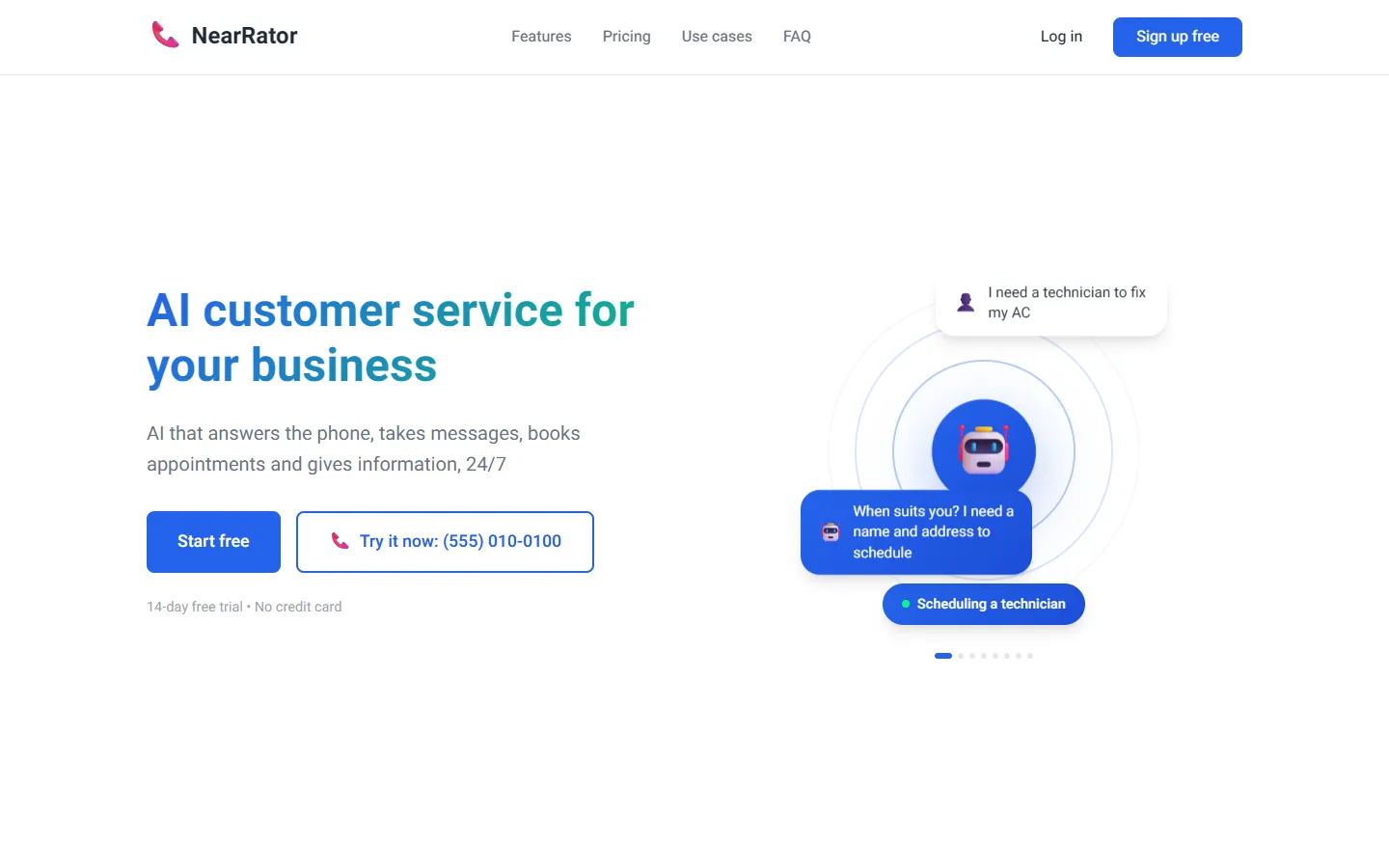
NearRator was an AI receptionist for small businesses. A customer calls the business, and instead of ringing out or hitting voicemail, the call is answered by an AI that speaks natural Hebrew, knows the business, and can actually do things: book an appointment, check if something is in stock, open a service ticket, take a callback request, or put the caller through to a person.
It came from a simple observation. A plumber under a sink, a clinic receptionist already on another line, a shop owner serving a customer: none of them can answer the phone, and every missed call is a customer who calls the next name on the list. I wanted something that a one-person business could set up alone in one sitting, that spoke Hebrew properly, and that felt like talking to an employee rather than pressing 1 for sales.
Specifications
- First real phone call
- 4 days after the first commit
- Built in
- About 2 months
- Actions it can take on a call
- 15
- Languages
- Hebrew first, follows the caller
- Status
- Shelved before launch
What it enables
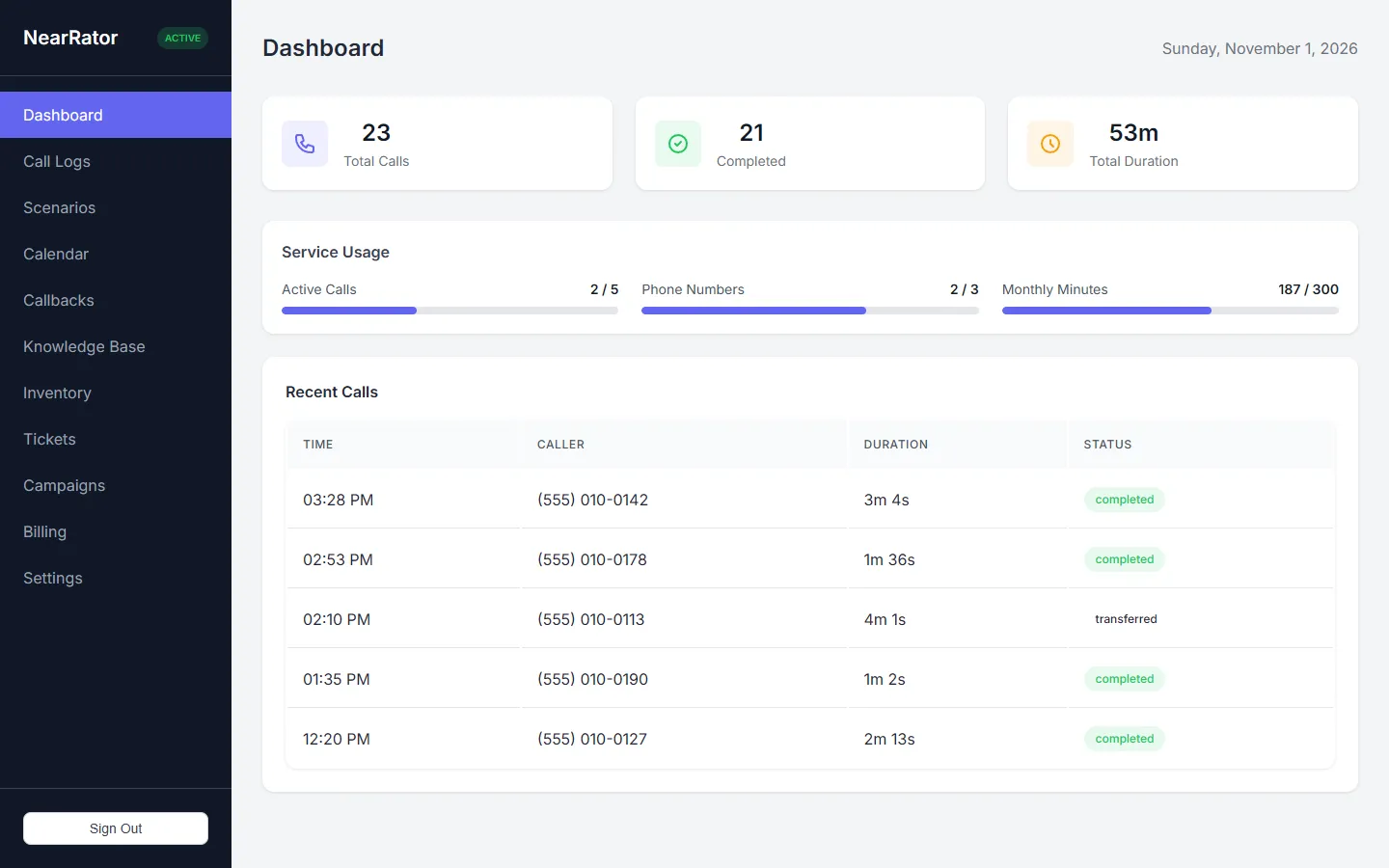
A business owner stops losing calls they can’t pick up. The AI answers every call, at 2 AM or in the middle of a lunch rush, and the owner reads what happened later in the portal: who called, what they wanted, what was booked, who is waiting for a call back.
A caller gets an answer, not a message box. “Are you open on Friday?”, “Do you have this in stock?”, “Can I come in tomorrow afternoon?” get a real answer on the spot, because the AI is told the business’s hours, services and availability before every call, including whether the business is open at that very moment.
A business that already has a phone number keeps it. Instead of switching numbers, they turn on forwarding for unanswered calls, and those calls land with their own AI. That also made trying it almost free: forward your missed calls for a day and see what happens.
A small team can reach out, not only answer. The same AI could call through a list of contacts for appointment reminders, feedback surveys or a new offer, and bring back a summary of every conversation.
Highlights
- A real phone call in Hebrew within 4 days. The project started as a browser demo where you could talk to an AI in real time. Three days later, the same conversation was running over an actual phone line, on a real Israeli number.
- An AI that acts, not just talks. Fifteen actions it could take mid-conversation, from booking into the business’s calendar and checking stock to opening tickets, sending a confirmation by SMS and transferring the call to a human.
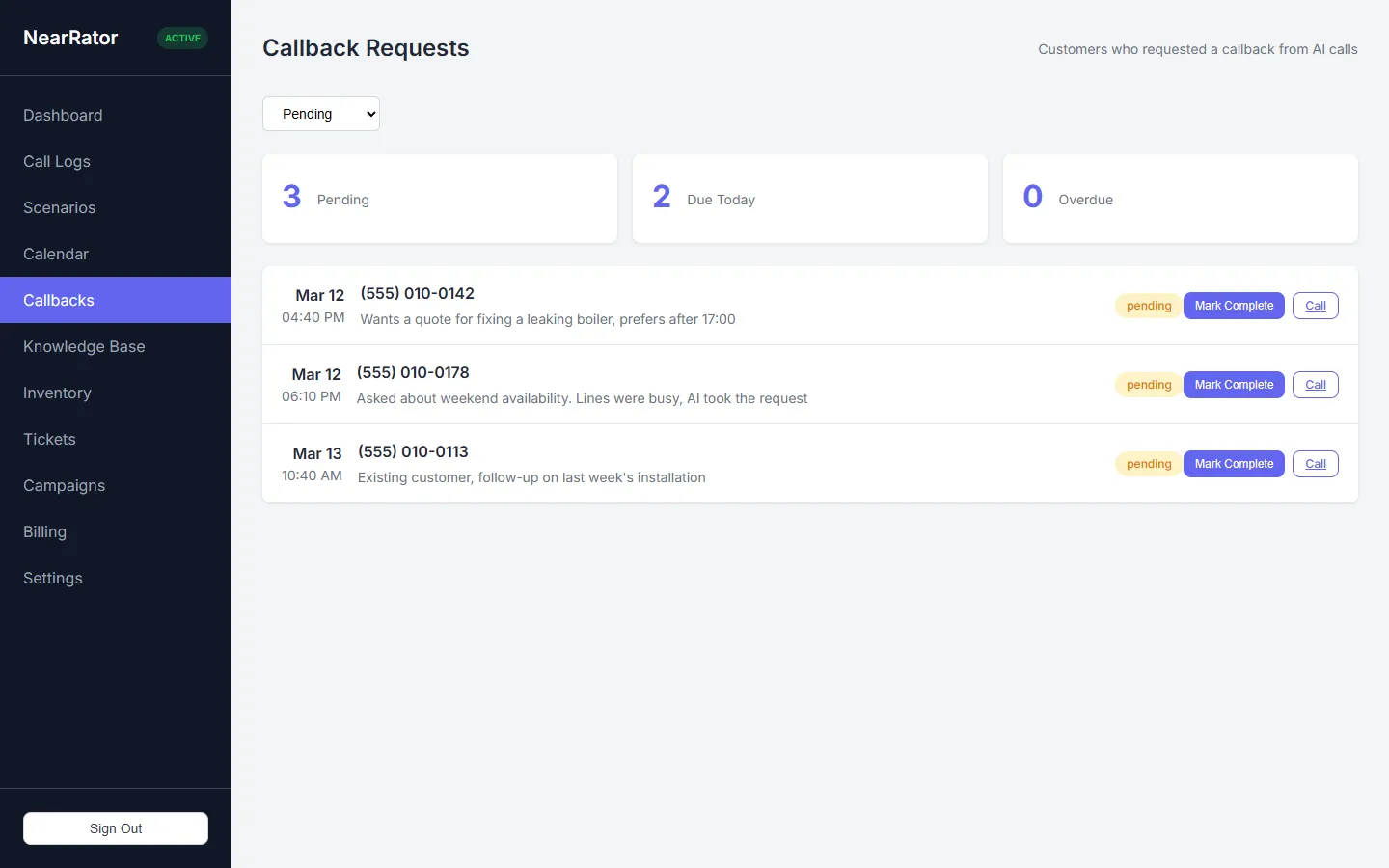
- Busy lines without a busy tone. Each plan had a set number of lines. When they were all in use, the caller was not dropped: the AI took a callback request, and it showed up in the owner’s queue.
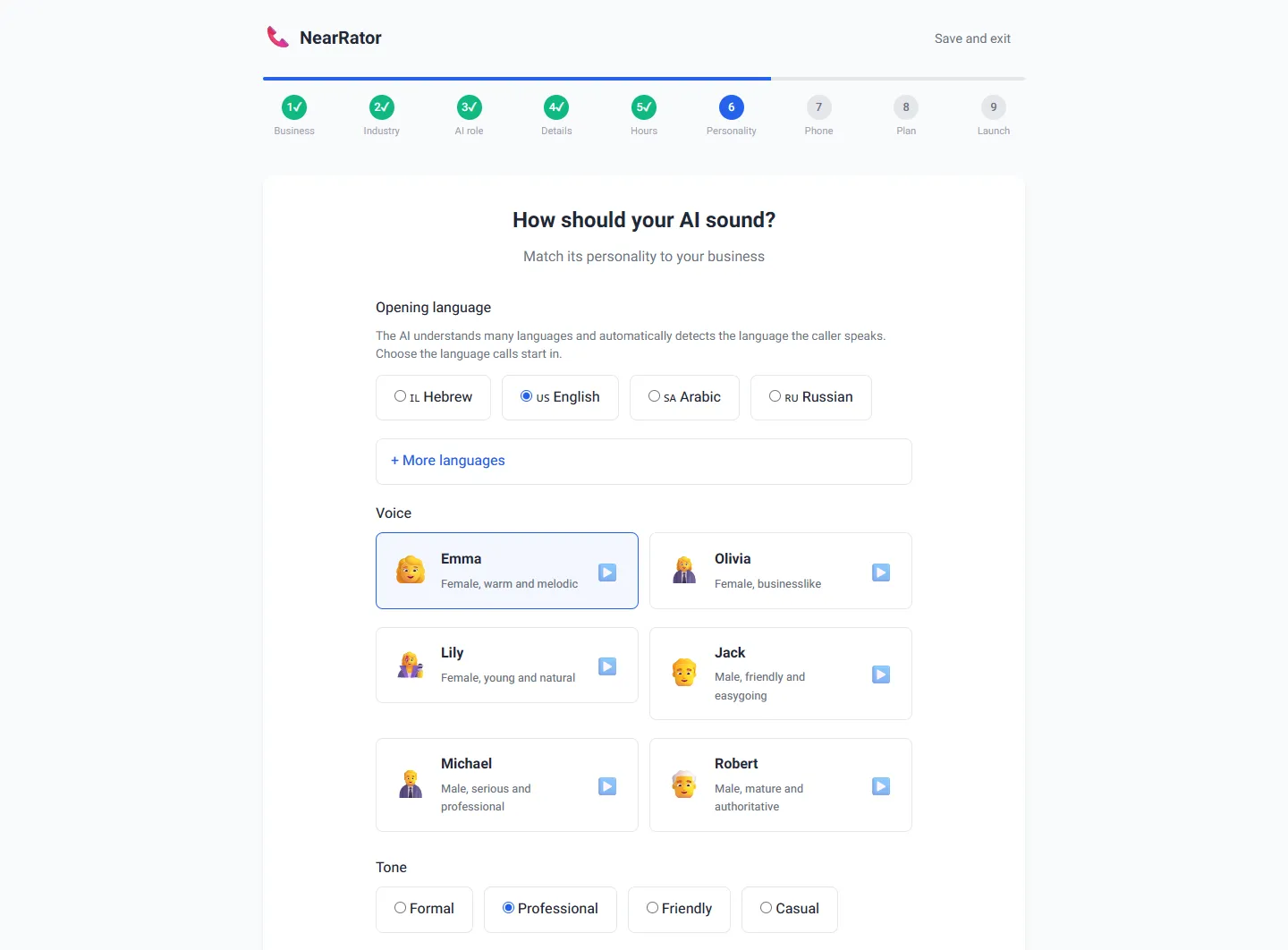
- A full product, not a demo. Sign-up, a nine-step setup wizard, a business portal, plans and payments, calendar sync, outbound campaigns and admin tools. Roughly 50,000 lines in about two months.
- One setup, many businesses. Every business got its own AI with its own voice, personality, hours and permissions, all running side by side on the same platform.
How it works
On a whiteboard it is three boxes. On the left, the phone network: a call comes in to the business’s number, or is forwarded from it. In the middle, my platform, which figures out which business the call is for, briefs the AI on that business (who they are, what they offer, the hours, what it is allowed to do), and keeps the call connected. On the right, a real-time voice model from one of the big AI labs, which listens and speaks at the same time, so callers can interrupt and be interrupted the way people do.
When the AI decides to do something, like book a slot or transfer the call, it asks the platform, the platform does it for real, and the AI tells the caller what happened. After the call, the conversation turns into records the owner can act on: a call log, a booking, a ticket or a callback request.
Challenges
Outcome
NearRator got all the way to a pre-launch checklist. Sign-up, setup, the portal and payments all worked, and a real number rang and answered in Hebrew. What was left was mostly hosting, accounts and paperwork. That is where I stopped, on purpose.
When I got to planning the launch, the question was no longer whether it worked. It was why anyone would choose it. The space was filling up fast: new AI receptionist and voice agent startups kept appearing, and large platforms and the AI labs themselves were moving into the same territory, with customers they already had.
I had no price advantage. Every minute of every call, I paid the AI lab for the voice model and the phone carrier for the line, and my price had to sit on top of theirs. The big AI labs, and the large companies with their own models or cheap access to them, pay close to cost for the same minutes. Whenever they want to, they can sell the same service for less than my costs.
Using AI APIs is not an edge. The hardest part of the product, the voice that understands and speaks, was rented. Everything I built around it was solid product work, but it was product work that any capable team can repeat. I built most of it in two months myself, which is exactly the problem. I asked myself honestly what NearRator offered that a big player could not copy quickly: Hebrew, and being friendly to very small businesses. Neither holds. The models already speak Hebrew well, and the platforms are shipping their own simple agent builders. Against a large company or an AI lab, a small team wrapping that same lab’s API is not offering extra value, it is waiting to be undercut.
So I shelved it, rather than spend the next year fighting for customers on margins I did not control. I don’t regret the build. It taught me real-time voice end to end, telephony, multi-tenant products, payments and onboarding, and it showed me how fast one person can now get from an idea to a working product. Next time I would ask the moat question in the first week, before the first line of code: what do I have that someone bigger cannot get cheaply? Data nobody else has, a channel to customers, or a niche deep enough that the big players won’t bother.